Friday, March 18, 2016

Lesson 7: Homelands

Nouamane Lahlou
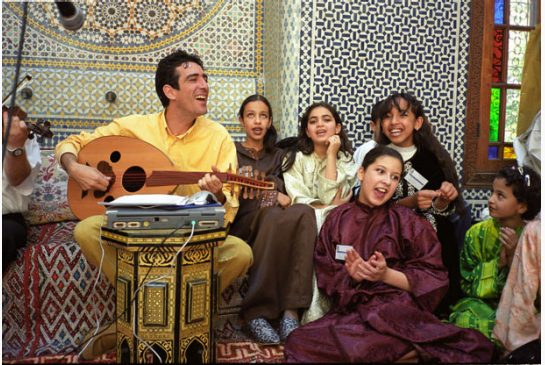
This lesson came together surprisingly this week.  I'd been working on gathering Moroccan music for a long time, because one of the assistant teachers that I work with is from Morocco.  I like to pick music from cultures that are represented in the classrooms so that the children can learn about the cultures that are all around them.  Unfortunately I don't read or speak Arabic, and it is quite difficult to navigate search engines in a language you don't understand!  I had some great help from our assistant teacher  who recommended I look up the famous Moroccan singer Nouamane Lahlou.


Dervish

Yesterday was St Patrick's Day, so I thought it was a good time to share some lovely Irish music as well.  Dervish is a traditional Irish ensemble fronted by the singer Cathy Jordan.  I quickly came upon "Welcome Poor Paddy Home" on youtube and was enchanted.  It's a beautiful song about returning to a beloved home.  Aha!  I suspected I'd be able to find 2 songs about a beloved homeland, and I easily did.  


Very little of Lahlou's lyrics are translated into English on the web, but it was obvious that his favorite topic is his homeland of Morocco.  "Bledi" means "my country", and is a song that he wrote when homesick while touring in the US.  It tells of how lovely Morocco is and how enchanting the people are.  He sings that if you don't understand how wonderful it is you should come to Morocco and experience it for yourself. 


I couldn't successfully convey this in class because we weren't watching the musicians, but I thought there was also a similarity between the ensembles. I found videos of both surrounded by audiences that were joining in and sharing the music together.  It seemed that both the music of Ireland and that of Morocco easily lend themselves to a casual and welcoming atmosphere.   

We heard Welcome Poor Paddy Home, Performed by Dervish, and
"Bladi"/ My Country, by Nouamane Lahlou.  (The song is #18 on the page.)


Here is the lesson plan.
Here is the coloring page. Print one for each student (double sided).
Here are the visual aides. If you have the capacity to project these, that would be great.  I have mine in a binder and walk around the tables giving everyone a closer look.


I also pointed out the wide geographical origins of the pieces on a large world map.  

Enjoy!

Monday, February 22, 2016

Lesson 6: A New Year

With all the Chinese New Year revelry in the air, I wanted to share some New Year's celebratory music.  I chose to  show how different people all over the world are inspired to sing as the old year turns to the new. I found a site that lists many songs for Chinese New Year here.

Gongxi Gongxi/ Greetings Greetings; a traditional Chinese New Year's song. Translation can be found here.  Listen on Youtube here.
Avinu Malkeinu/ God hear us...; a traditional Jewish New Year's sung prayer.  This version composed by Max Janowski and sung by Barbra Streisand.  Listen on Youtube here.


Barbra Streisand

For a Reform Jewish perspective on the history of Avinu Malkeinu, you can read here.  General information can be found at Wikipedia.


I showed them pictures of the dragon being paraded down a street for the Chinese New Year, and we talked about our own Philadelphia Mummer's parade where people also dress up and parade down the street on January 1st.  I told the children about Jewish New Year/ Rosh Hashana and Yom Kippur that occur earlier in the Fall, and how Jewish people go to synagogue and sing prayers together and listen to a cantor sing as well.  


We talked about how though the Chinese New Year song was from China, it is now sung in Chinatowns all over the world, including our own city.  I taught them that although Max Janowski was born in Berlin, Germany, he worked in Japan early in his career and spent most of his life in Chicago.  Music truly travels the world. 

One class loved the joyful and upbeat Gongxi Gongxi, and another loved the famously rich voice of Barbara Streisand.  They all seemed to enjoy the lesson. 

Here is the lesson plan.
Here is the coloring page. Print one for each student (double sided).
Here are the visual aides.  If you have the capacity to project these, that would be great.  I have mine in a binder and walk around the tables giving everyone a closer look.

I also pointed out the wide geographical origins of the pieces on a large world map.  


Enjoy!

Sunday, February 7, 2016

Music and Play: Snow and Valentines

Last Friday I brought songs, a poem and games from Kodaly in Kindergarten, and celebrated the tiny bit of snow that had fallen that morning by singing about snowflakes and mittens.

I also introduced Kodaly hand signs from Do to Sol.  We started with our pitch warm-up, which is matching pitches, rising and crouching depending on how high or low the note is.  Then I had everyone sit and watch me sing the scale Do- Re- Mi- Fa- Sol, showing the hand shapes and encouraging them to copy and sing along.  I was amazed at their unison singing!  All the classes did wonderfully and I am sure we will continue with hand signs.

Mitten
Thumbs in the thumb place,
Fingers all together.
This is the song we
Sing in mitten weather.

When it is cold it
Doesn't matter whether
Mittens are wool or
Made of finest leather.

This is the song we
Sing in mitten weather,
Thumbs in the thumb place,
Fingers all together.

See the Pretty Snow Flakes
See the pretty snowflakes
Falling from the sky,
On the walls and house-tops
Soft and thick they lie.


We talked about the Groundhog's prediction and I read this poem:

A Good Day for Groundhogs
by Ivy Eastwick

The funny little groundhog
left his funny little hole
Without a word to Porcupine
To Weasel or to Mole.

He sniffed at the air which
was very cold and chill.
He stared at the sky which
was wild above the hill.

He kicked up his hind legs,
made a happy little sound,
And danced a merry jig upon
the icy winter ground.

Then he called to his family
"The Winter's almost done!
Spring is round the corner,
Let's have fun!"

Then, of course, we sang a groundhog song!

Ground Hog Song
Winter goodbye, Blue is the sky.
You can't stay round this place,
Groundhog has shown his face,
Winter goodbye, Blue is the sky.

We talked about Valentine's Day, which is coming up, and sang a Valentine's song, learning about rests and walking in time to the beat.

Valentine
Valentine, Valentine, red and blue,
Valentine, Valentine, I love you.

Monday, February 1, 2016

Lesson 5: Film Scores

One of my students asked hopefully if  we could please listen to Star Wars.  I was about to equivocate and say I would consider it, but then immediately exclaimed that it would be a a fabulous idea.  Of course the children should learn about John Williams!

John Williams
I chose to teach about the history of film scores by starting with one of the very first and ending with the ubiquitous theme from "Star Wars".  In researching for this lesson I learned that the third original film score that was ever written was by the French Romantic composer Camille Saint-Saens.  How wonderful to have an opportunity to share his music!
seated portrait of middle-aged man, bearded, in formal 19th-century costume


Another bit of trivia I learned was that one of the purposes of having music played during early films was to drown out the distractingly loud noise of the projector.  I showed the children the small ensemble that played Camille Saint-Saens' score, and how it would fit into the front of a theater. They could see that the full orchestra needed to play John Williams' score would never fit.

We listened to:
L’Assassinat Du Duc de Guise, Op. 128:Cinquieme Tableau-Camille Saint-Saens
Main Title/ Rebel Blockade Runner from Star Wars- John Williams

Here is the Lesson Plan.
Here is the Coloring Page.  Print one for each student (double-sided).
Here are the Visual Aides.  If you have the capacity to project these, that would be great.  I have mine in a binder and walk around the tables giving everyone a closer look.

I also pointed out the geographical origins of the pieces on a map in the classroom.

Enjoy!

Sunday, January 24, 2016

Music and Play

Up to this point I've just shared my lessons for listening, but I thought it might be nice for parents to have an idea of the other music we are enjoying together in class.  Music and Play focuses on learning pitch, basic music vocabulary (like piano and forte, adagio and allegro), dynamics, rhythm, and solo and choral singing. 

Just before this big blizzard closed down our city for the weekend I had a chance to play with the kindergarteners again.  Because it is Winter and we were getting excited for the snowstorm, I chose a snow-themed song play.

I'm not trained in Kodaly Method, but I have a wonderful book, Kodaly in Kindergarten, in which I've found some great games.  The first 2 songs in this lesson were from this book.

5 Little Snowmen
5 Little Snowmen standing in a row,
Each with a hat and a big red bow.
5 Little Snowmen dressed for the snow,
Now they are ready, where will they go?
Wait till the sun shines, then they will go
Down to the fields with the melting snow!

We also reviewed some other games that we have played:

Doggie Doggie
Doggie Doggie, where's your bone?
Somebody took it from my home.
Mary do you have my bone?
No I do not have your bone!

Here's clip from youtube of a class playing the game.  I couldn't find a video of exactly how we play, but it's close!

Bluebird
Bluebird, bluebird through my window (x3)
Oh, Johnny I am tired!

For this game, we usually play by starting with 1 child and making a larger and larger chain that goes in and out of the "windows" the other children make by standing in a circle, holding hands and raising them up.  On Friday we played differently because it was "dress-down" day.  I chose colors and if I sang a color, everyone who was wearing it had to walk in and out of the "windows".  So we sang "Yellowbird", "Purplebird", and so on.

Elizabeth Mitchell has a wonderful version of this song on her album You are My Little Bird.  The lyrics are a bit different, but the tune is almost the same.

I learned this next one from a colleague, I'm not sure where it is from.

Tidy-o
Wash one window tidy-o,
Wash two windows, tidy-o,
Wash three windows, tidy-o,
Jingle on the rooftops, tidy-o!
Tidy-o, tidy-o,
Jingle on the rooftops, tidy-o,
Tidy-o, tidy-o,
Jingle on the rooftops, tidy-o!

For Tidy-o, you can make a kind of line dance out of it, but we are still working towards that!  For now we sing, make window-washing movements with our hands and slap our knees in time. 

One class became tired and wanted to take a nap (they were having pajama day, after all!), so I sang and taught them "This Pretty Planet", a song by Tom Chapin, while they lay on the rug.

In one class we had time for another song, so I taught them the second verse to Ring Around the Rosie:

Ring around the rosie
Pocketful of Posies
Ashes, ashes,
We all fall down!

The cows are in the meadows,
Eating buttercups.
Thunder! lightning!
We all jump up!

I still get requests every week for "Witch, witch", a song game I taught them at Halloween.  I keep saying no, because, well, it's not Halloween, but I'll have to make time to review it again before the year is out, because it does seem to be a favorite.  I'll share it when I do.

Enjoy!

Friday, January 15, 2016

Lesson 4: Flutes

Dizi flutes
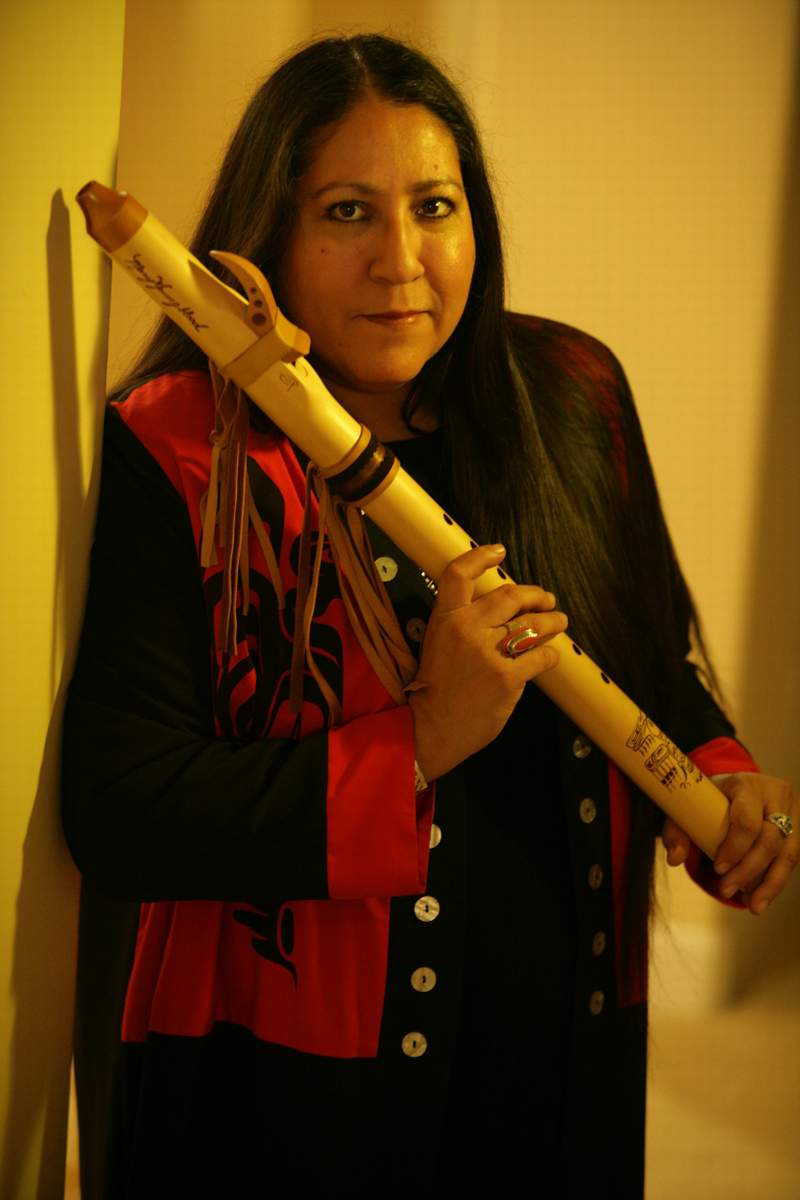
My daughter came home from school and told me that some older students had visited her class to perform flute music, which, of course inspired me to look up flutes around the world.  Two that particularly interested me were the Native American flute and the Dizi, a traditional Chinese flute. The Native American flute appears in many Native American cultures.  I found a very useful website with information on different Native American cultures that is geared towards kids here.  One of the composers, Mary Youngblood, is half-Aleut and half-Seminole, and you could use that site to expand the lesson.  
Mary Youngblood


Tears for Kientepoos- composed and performed by Mary Youngblood.
A Joyful Reunion- composed and performed by Yu Xunfa

Here is the lesson plan.
Here is the coloring page. Print one for each student (double sided).
Here are the visual aides.  If you have the capacity to project these, that would be great.  I have mine in a binder and walk around the tables giving everyone a closer look.

I also point out the geographical origins of the pieces on a large world map.  


Here is what my daughter, Willa, came up with:


The second seems to be a flute that has turned into a fairy!


I love to see what the students are inspired to draw.  I saw rain, rainbows, dancers, dinosaurs, ninjas, Chinese characters, many flutes, and one child cheerfully reported she was drawing "happiness".


Enjoy!

Friday, January 8, 2016

Happy Hanukkah!

As promised, here is the Hanukkah song-play I wrote last month:

This can be a finger-play or a game, depending on the age of the kids and how many are in the group.


Happy Hanukkah

Happy Hanukkah, it's the first* night,
How many candles do we light?  
(hold hands out)
We light one!  
(hold up 1 finger)

Happy Hanukkah, candles burning bright!  
(let candle finger "flicker"/ wiggle)
Burning down and out of sight!  
(lower candle finger and hide hand behind your back)

Change the words for the 8 nights, until you have 4 fingers up in each hand.

Here is a video of the finger-play version.

You can also use this song as a group game.

Variation 1:
 -Place 8  paper plates in a line.  Put 1 plate in front or to the side.  These are the "candle holders"/ menorah.
-Choose 1 child to be the "Shamash"- the candle that lights the other candles.  Have them stand on the plate set apart.

All: Happy Hanukkah it's the first night, how many candles do you light?
Shamash: I light one!
[The shamash taps a friend on the head ("lights the candle") and they go to stand on the first plate on the right.]
All: Happy Hanukkah, candles burning bright! Burning down and out of sight!
[The shamash and candles sing and wiggle/ "flicker", then slowly bend down and fall to the ground on "sight!"]

-Next, the Shamash taps another friend on the head to be the second candle, and so on, until there are 9 children up, making the menorah.


We have 28 kids in our classes, and I tried this, changing the Shamash and candles each "night".  I'll be honest.  It took way to long.  I think it would be great with older elementary children.  And perfect for a group half the size.  Even if you have more than 9 kids, you could make a group of Shamash candles- why not?!

Enjoy!

*My husband takes issue with singing "we light one!" when we are actually lighting 2 candles: the shamash and the first candle.  I always imagined it was the shamash singing, and, therefor, the shamash (which is the lighting-candle, after all) lights one.